Monthly dividend ETF calendar in Canada: ex-dates, record dates and pay dates
Updated October 26, 2026
Many Canadian ETFs pay every month, some twice a month, and a few US funds every week. With a dozen holdings across a few accounts, that's hundreds of payments a year — each with three dates that matter.
The three dates
- Ex-dividend date: you must own the units before this date to receive the payment. Buy on the ex-date and you don't get it.
- Record date: the date the fund checks its list of holders. Since Canada and the US moved to one-day settlement in May 2024, it's the same day as the ex-date.
- Pay date: when the cash reaches your account — often a week or more after the ex-date.
Earned, but not paid yet
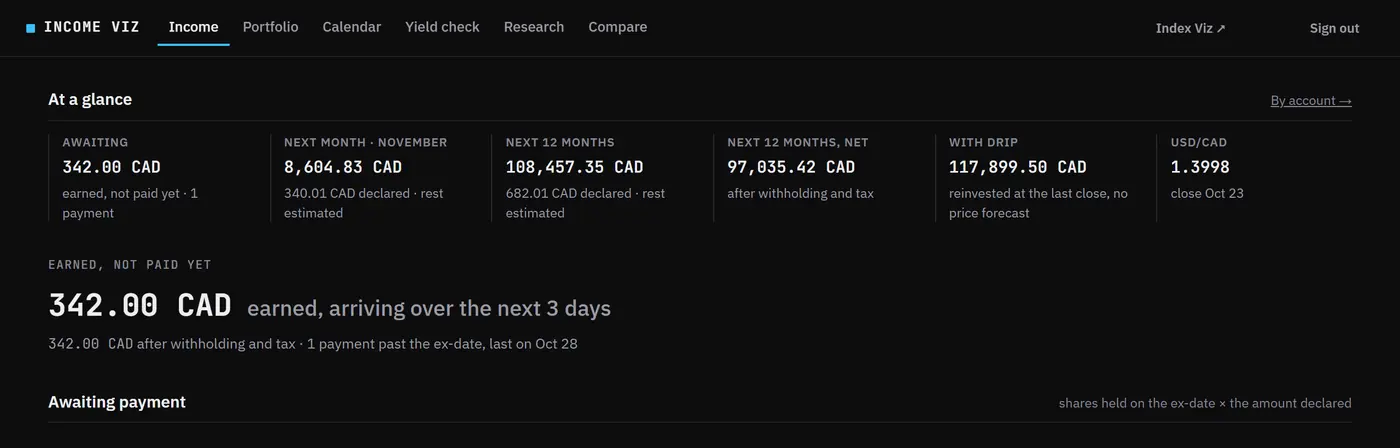
Once the ex-date passes, the payment is yours even though nothing shows in your account until the pay date. Brokers usually show it only once it's paid. Tracking from the ex-date tells you, at any moment, how much you've earned that is still on its way.
Monthly, semi-monthly and weekly payers
Monthly payers often go ex near the end of a month and pay early in the next, but every issuer sets its own schedule. Semi-monthly and weekly payers add more dates. Laying all of them on one calendar by pay month shows how even (or lumpy) your income really is.
Declared vs estimated
A payment is declared once the fund announces its amount and dates. Further out, a calendar can only estimate from the fund's past cadence and latest amount. Income Viz shows the two differently — declared solid, estimated hatched — and stops estimating a payer that has gone quiet for two periods.